
The Poor: What Have You Done For Me Lately? 2011. Acrylic and Enamel on Luan. 18″ x 24″
A few years ago I was having a conversation with a nun about Pope Benedict’s insistence on the female religious orders (especially in America) to be more obedient. I found his fears of a “dangerous feminism” damaging the Church comical, if not downright sad. The comical part was the characterization that the nuns should not be focusing on serving the poor and fighting for social justice, even though, ostensibly, this was the very ministry of their husband, Jesus Christ. Of all the battles to fight, why pick on women who have chosen to dedicate their lives to serving the most in need? Our conversation turned mocking as we went over the things the nuns should have been doing instead (aside from being more obedient). Treating the poor more like a capitalist would see them (only in terms of market value) lead to the idea of what have the poor really done for us anyway? Why were the nuns wasting their time on people who offered “no value” in return. However, the painting in execution takes on a much more profound aspect, not one of making fun of The Poor, but one where the viewer is instead challenged to think about what they have done recently in relieving the plight of the world’s lowest. [What was a troubling development, as it turns out, was the Vatican’s usage of the specter of “disobedient” nuns as a grounds for seizing a number of the assets belonging to the orders, including retirement accounts.]

Detail of text layers and my desire for leaving drippy accidents alone in a lot of my paintings.
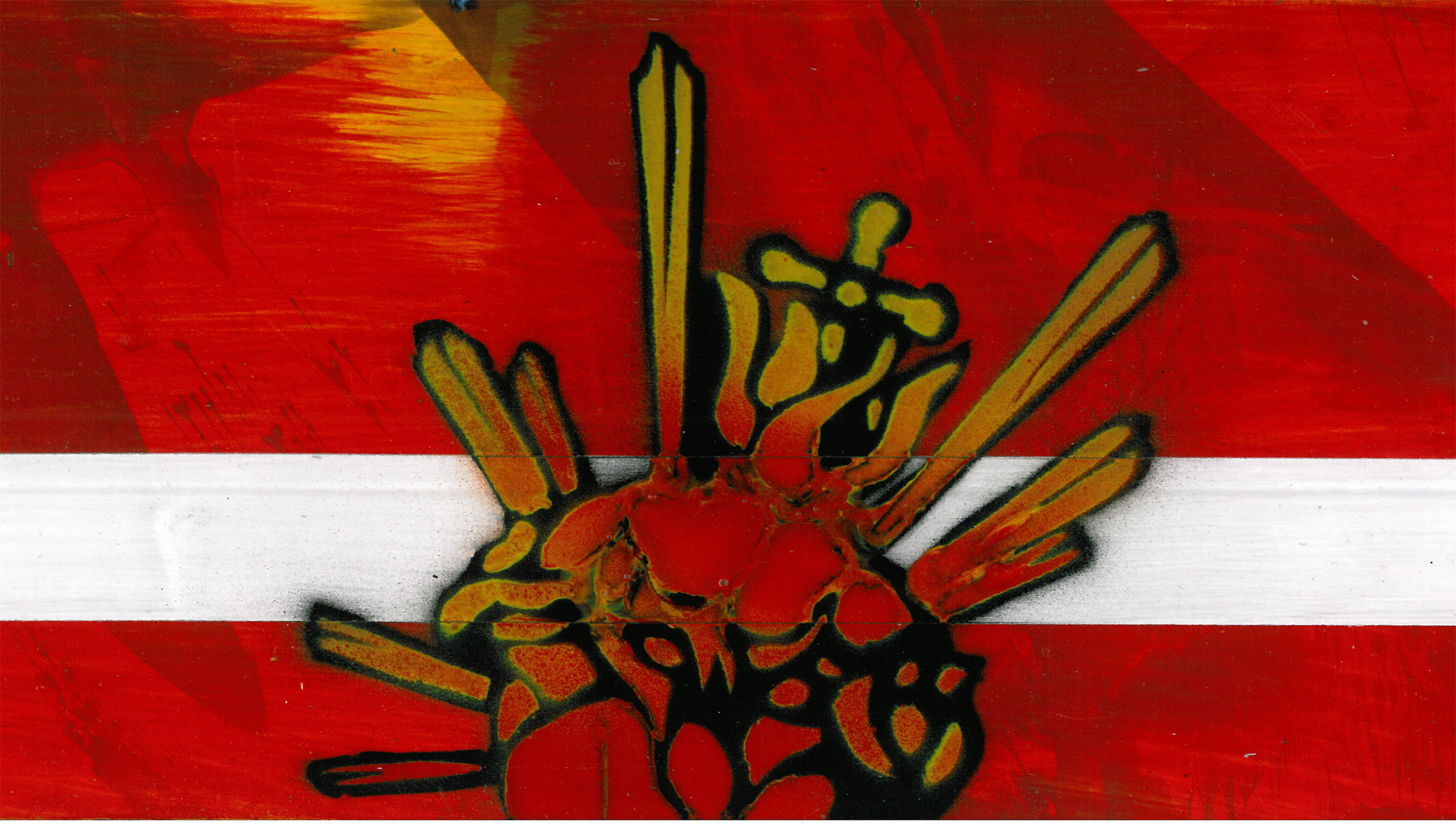
Detail of the Spray Enamel (stenciled); the Sacred Heart of Jesus is often associated with female religious orders (Nuns) even if they are not part of the Order of the Sacred Heart, itself.
 GrinGoh.com